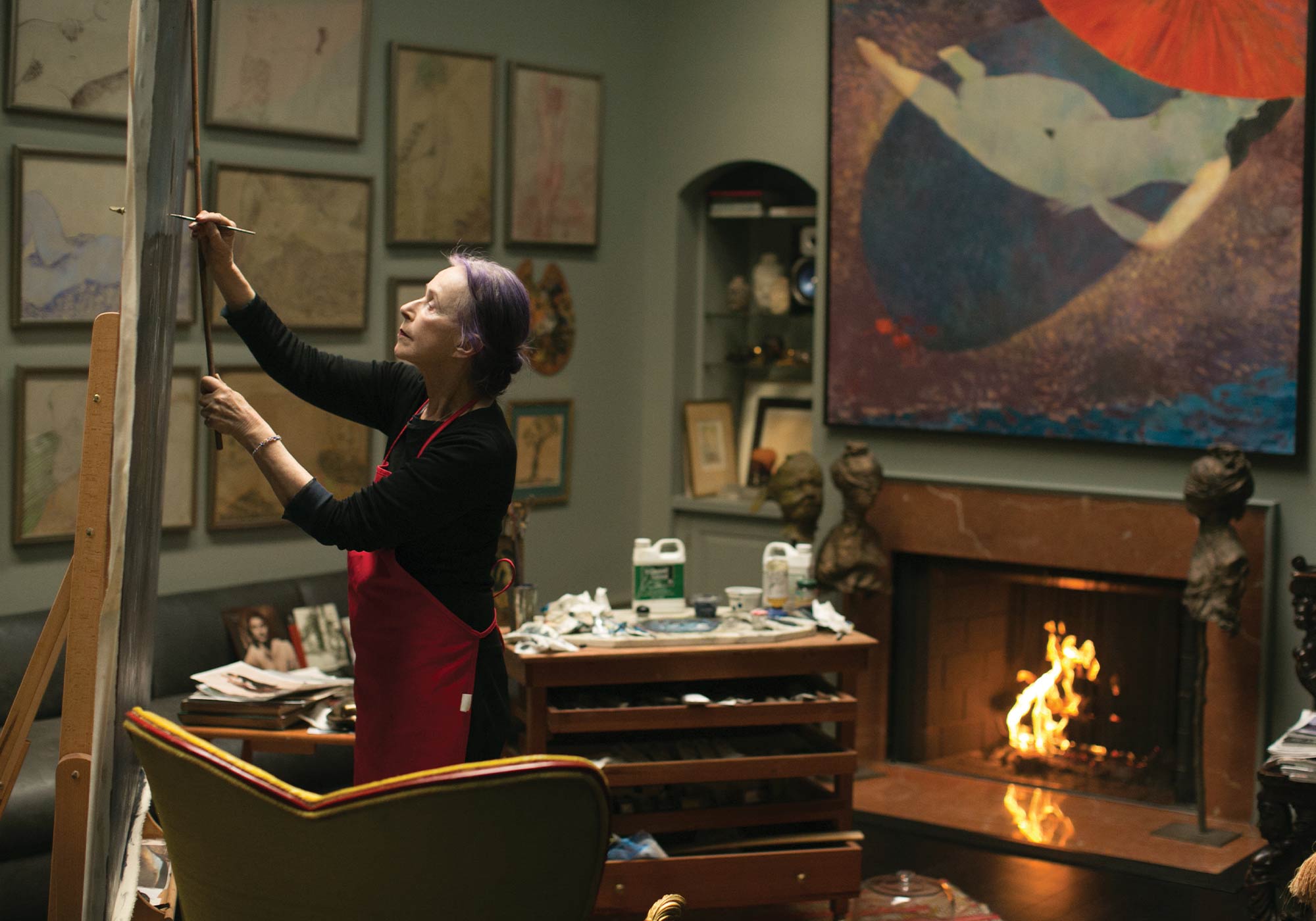
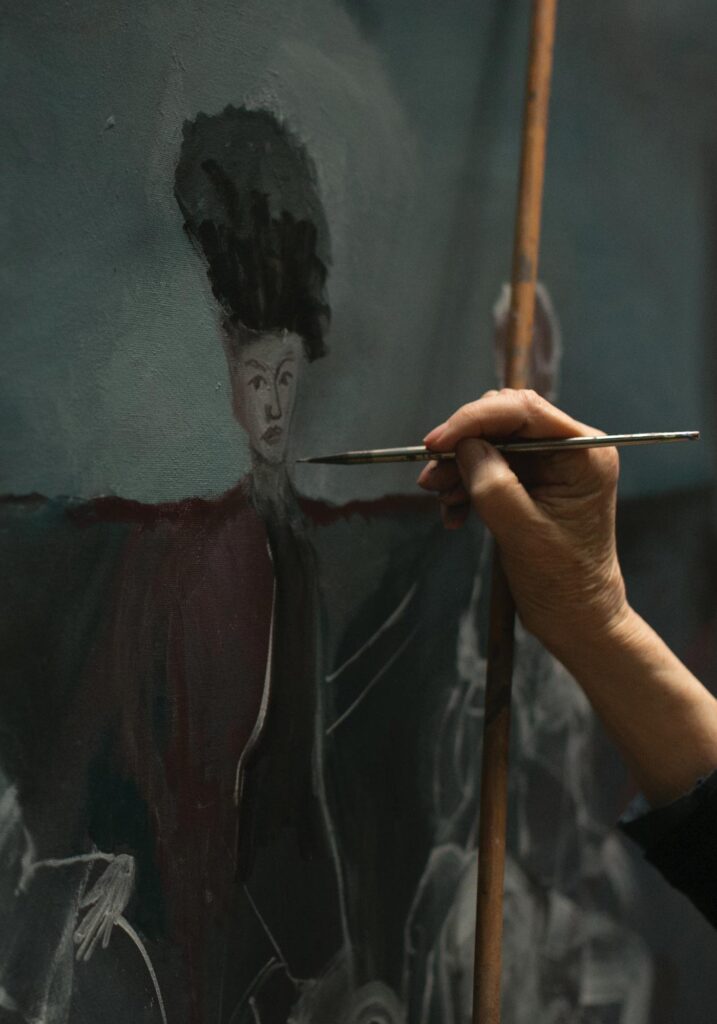
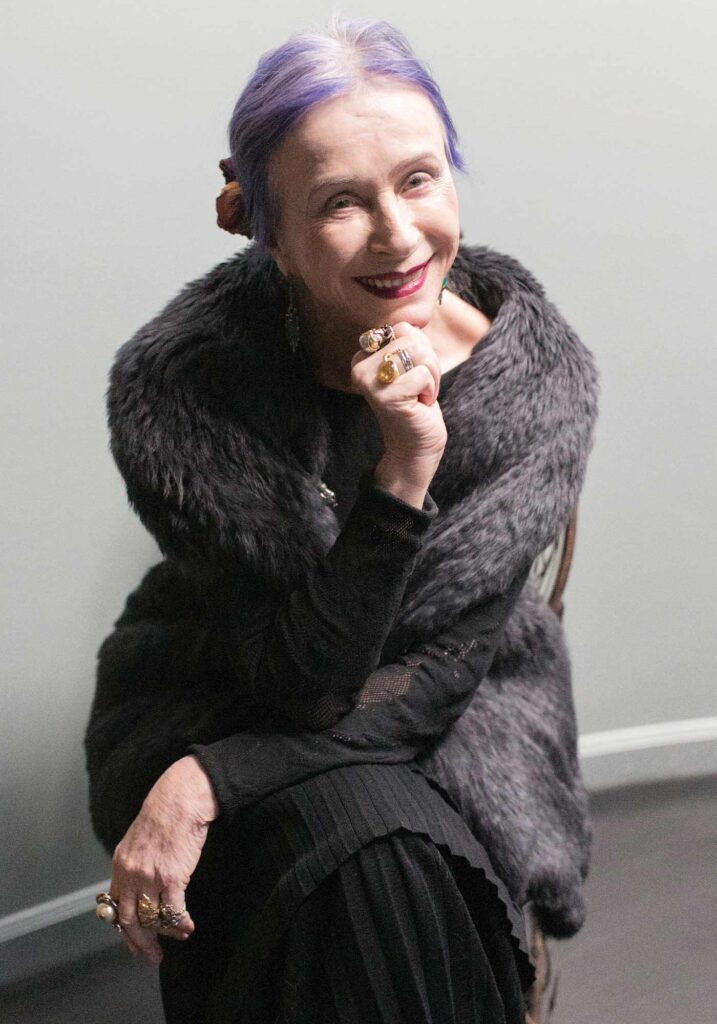
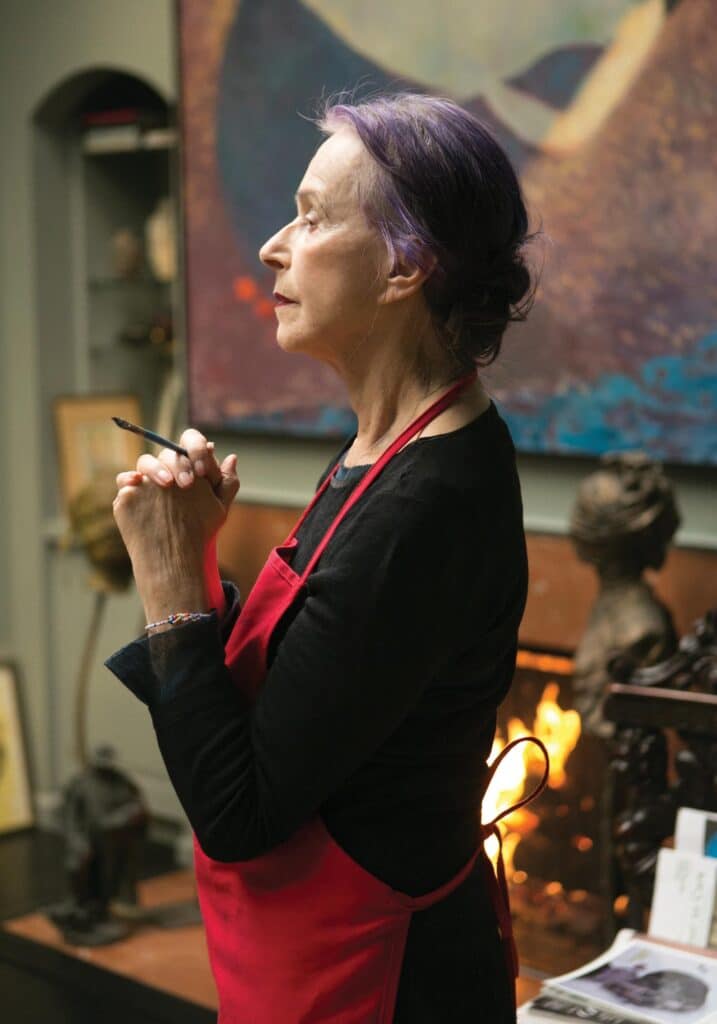
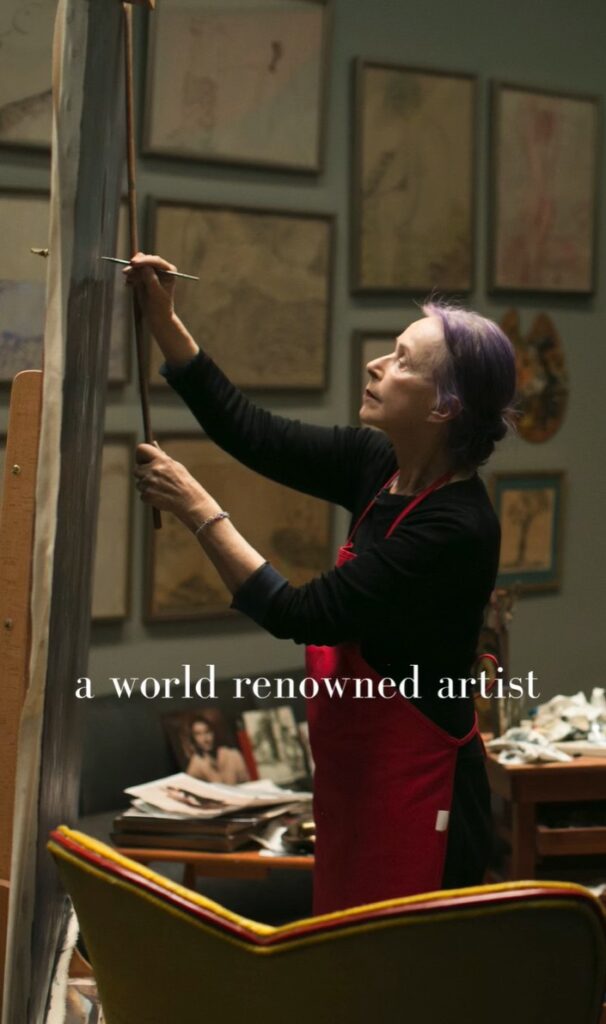
Beatrix Ost, a Charlottesville-based artist, writer and former Virginia estate owner, spent a lifetime shaping beauty—on canvas, in words and in rooms filled with candlelight and conversation. A painter and sculptor who studied with Austrian Expressionist Oskar Kokoschka, Ost embodies the German concept of gesamtkunstwerk—a “total work of art.” Her life and creative output are inseparable, each informing the other with quiet intention and cultivated grace.
Beatrix Ost’s Art and Identity from Europe to New York
Beatrix Ost’s artistic journey began in Europe in the mid-1900s. She had already achieved success as a painter and sculptor in Europe after studying with famed Austrian Expressionist Oskar Kokoschka. She exhibited widely before setting her sights on America in the 1970s, but the move to New York proved challenging.
“I struggled finding a gallery. It was a harsh world for women painters,” Ost shared. Max Ernst, a German painter, sculptor, graphic artist and poet, told Ost that she was a great artist and could attain a greater level of fame. “But you have to wear a big hat,” Ernst said to her—she would need to draw as much attention to herself as to her artwork.
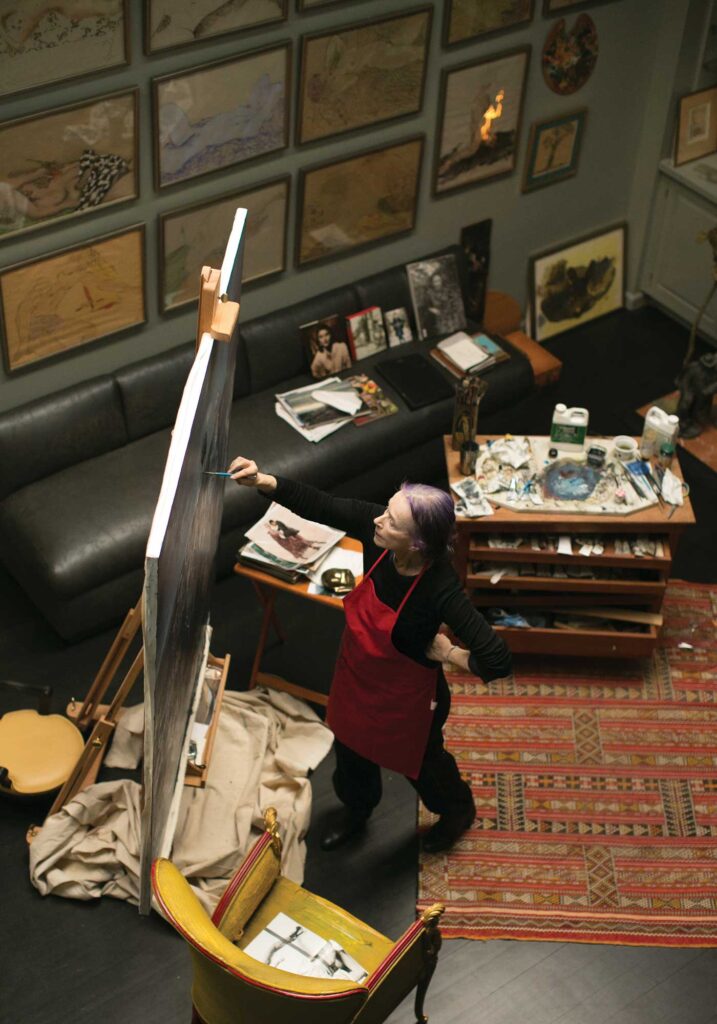
Prior to moving to America, Ost was a painter and sculptor of some renown. Upon making the move, however, she opted for a different life. She began to concentrate on her family and Estouteville, her central Virginia estate, focusing on her inner life.
Beatrix Ost’s Painting Style and Philosophy
“If you take care of your emotional life, everything else becomes enormously easy,” Ost told me. “I can write the article, do the creative work, cook for 15 people. Clearing out the emotional house is the first step to make what comes next an easier task.” This devotion to her wellbeing is Ost’s first source of inspiration, an admirable response to the difficulties she has faced in life. The end result is a sense of calm introspection infused in her conversation, artwork and actions.
“If you take care of your emotional life, everything else becomes enormously easy…clearing out the emotional house is the first step to make what comes next an easier task.”
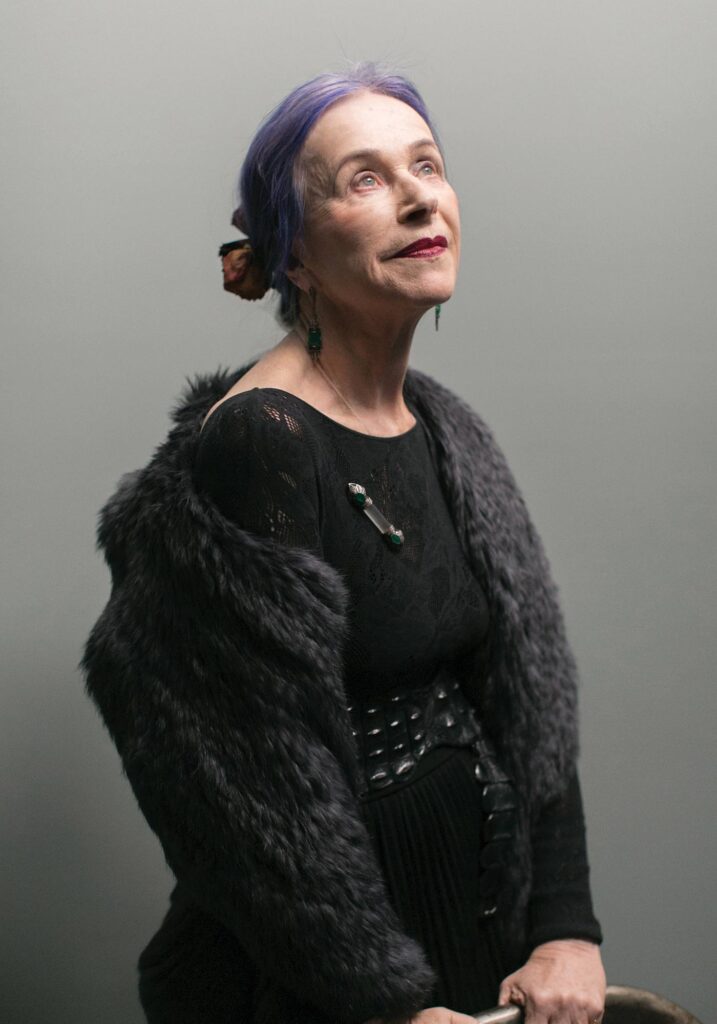
I witnessed this sense of calm introspection and more when she and I met over coffee. Dressed in carefully curated clothes and jewelry, Ost left me in awe. Not only did her attire exude that of an artist’s hand but her careful contemplation of her matcha green tea latte resembled that of an art lover admiring a painting on the wall at a gallery.
Here, in this instant, the word “gesamtkunstwerk” leapt to mind. The word was the only term I could come up with to describe her talents as a painter, writer, sculptor, interior decorator and hostess, among many others. Ost is somehow entirely modern and out of time; she could easily be transplanted from contemporary Charlottesville into Gertrude Stein’s Paris salon, any New York art gallery opening from the past half-century or into the front row of a very haute fashion show.
Beatrix Ost’s Life in Charlottesville
While Ost spent three happy decades living at Estouteville, an early nineteenth-century estate half an hour from Charlottesville, she now lives in a spacious apartment in downtown Charlottesville.
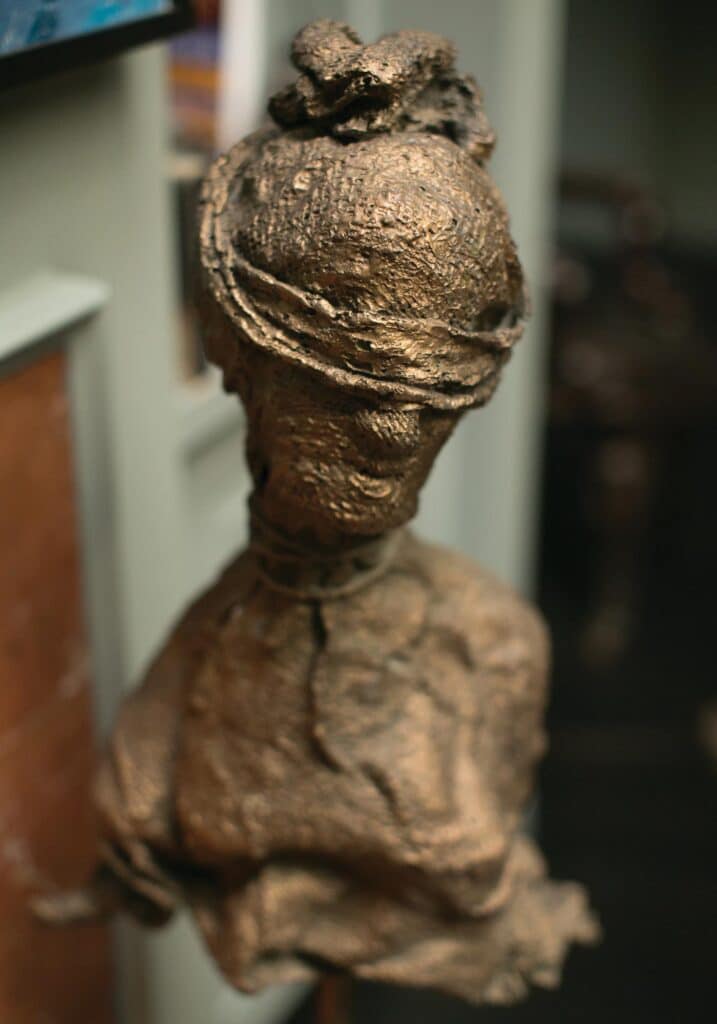
More than 40 years after coming to the Charlottesville area, Ost is still very much in love with her adopted hometown. “I am flabbergasted by the quality of life here. We have the most absolutely delicious restaurants! Charlottesville came out of nowhere…and the absolutely magnificent American wines. I feel lucky I landed here. It’s a small town, but it doesn’t feel provincial…artists create very good art here.”
‘My Father’s House’: Writing About Wartime Bavaria
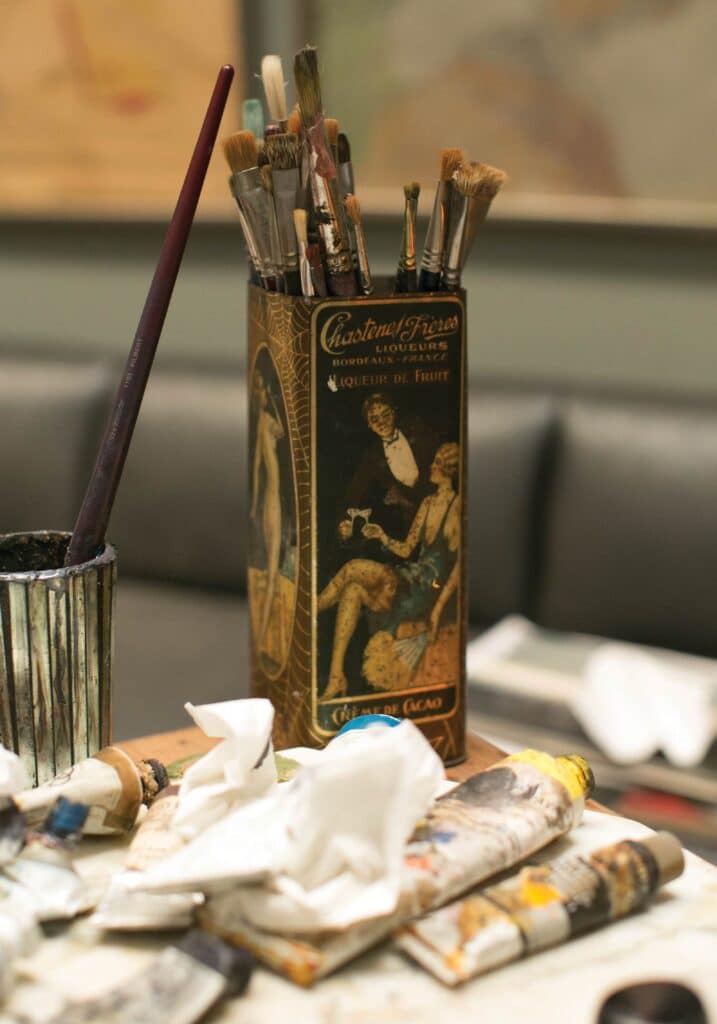
Ost seeks to answer questions through her artwork that are very different from her teacher Kokoschka, an Austrian Expressionist painter known for his psychological intensity. Ost’s paintings have focused on form and color without the emotional fraughtness that marks Expressionism. Like Ost herself, the work is of the moment, full of rich, saturated colors and careful attention to form. It draws its energy from a sense of stillness; that kind of contemplation is also a hallmark of her writing.
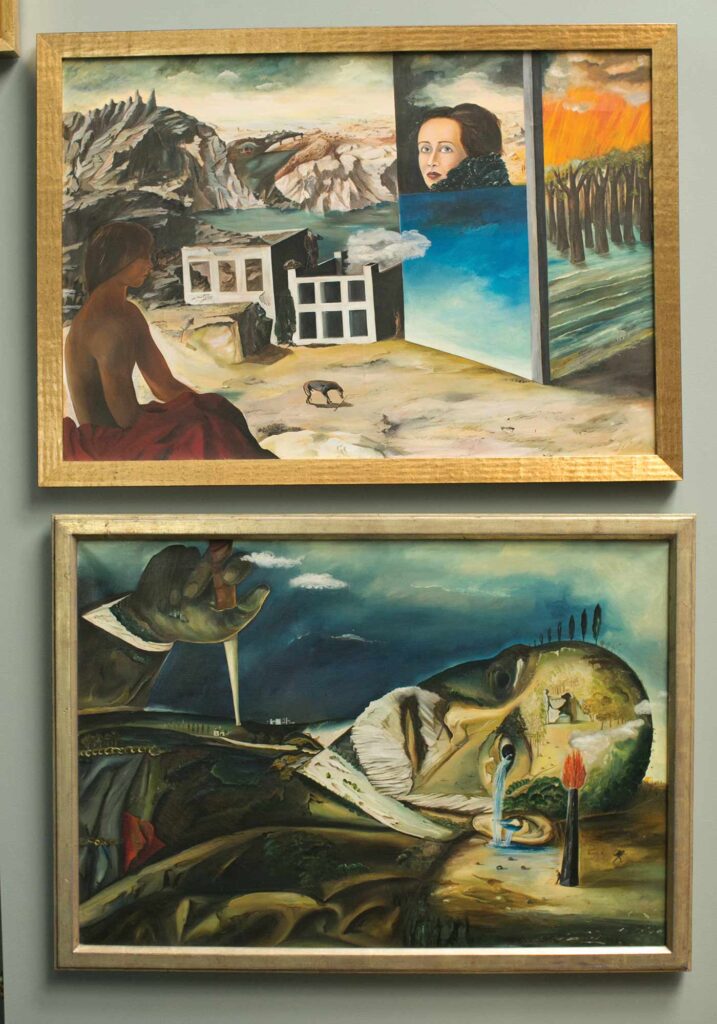
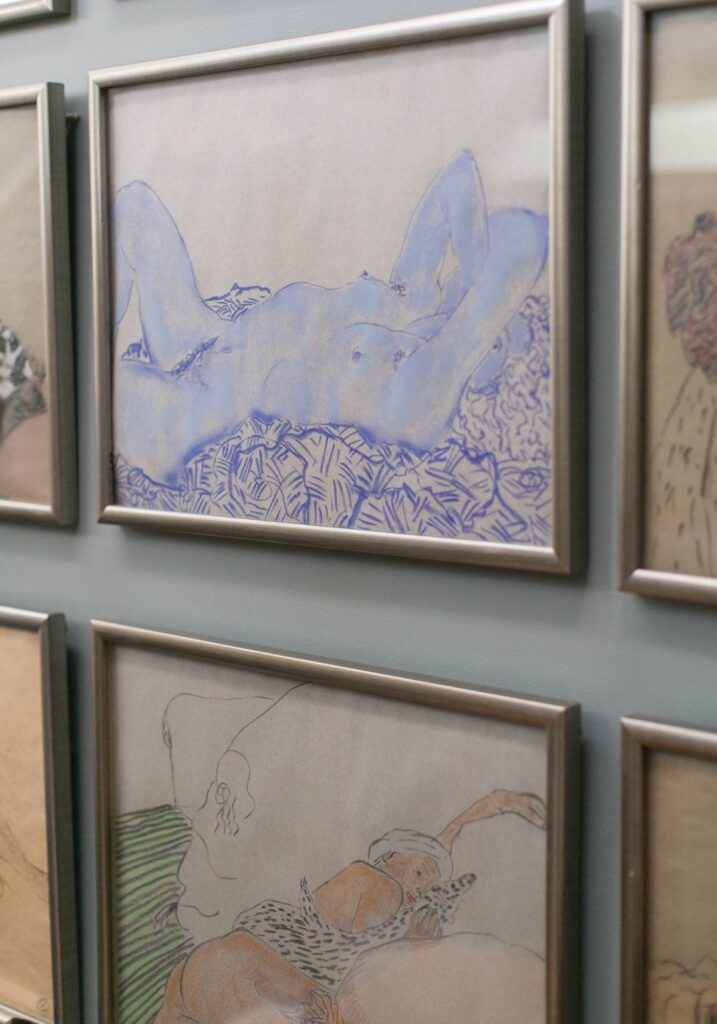
Ost wrote about her early years in Bavaria under the shadow of the Nazis in her memoir, My Father’s House: A Childhood in Wartime Bavaria. In her writing, she sits with a moment and explores it closely, deeply, without rancor. She credits her childhood for her broad perspective. Growing up during the war, Ost said, “The whole country was gone, with its culture. You had to create it yourself; there was nothing to buy.” Perhaps this explains her skills in so many different areas—practical work, of course, but also an interest in the philosophical issues and interpersonal relationships that correspond to her artistic questions.
Charlottesville’s the bardo by Beatrix Ost
In 2026, Beatrix Ost opened a gallery and café in downtown Charlottesville called the bardo. Partnering with the Argentinian-inspired Cumbre Bakery, Ost intends the space to be a place for introspection and experience. The gallery itself is entirely devoted to Ost’s artwork from throughout her illustrious career. Ost also plans to use the space as an event venue and offer regular philosophical and artistic workshops.
The Tibetan word ‘bardo’ means “liminal, interval, intermediate state, transitional process or the in between” and usually refers to the gap between lives. In this instance, the bardo will provide a space for reflection, inspiration and exposure to boundless creativity via the Ost’s surrealist artistic expression. “I set out to create a space in which the community can gather for art, conversation, presence, and sensory exploration,” Ost said. ~
This blog post may contain sponsored content or affiliate links. If you click on a link and make a purchase, we may earn a commission at no additional cost to you. All opinions are our own. We only promote products and services that we believe are of high quality and value to readers.
you might like