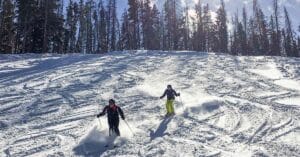
Vail, largest ski resort in Colorado, sits high in the Colorado Rockies at more than 8,100 feet. Completed in 1962, the resort offers world-class skiing across more than 5,300 acres. Its quaint village nods to European alpine towns. Luxury hotels, upscale boutiques and fine dining line cobblestone streets.
Colorado Dog Sledding: A Bucket-List Winter Adventure Near Vail, Colorado
Adding to the region’s many outdoor adventures, winter enthusiasts can now add another bucket-list experience just 42 miles away in Silverthorne at Colorado Dog Sledding. Third-generation musher Dallas Seavey, the world’s only six-time Iditarod champion, founded the company in 2024 to offer a rare experience. Guests get to dog sled with champion sled dogs during their daily exercise. It’s not your average tourist trap.
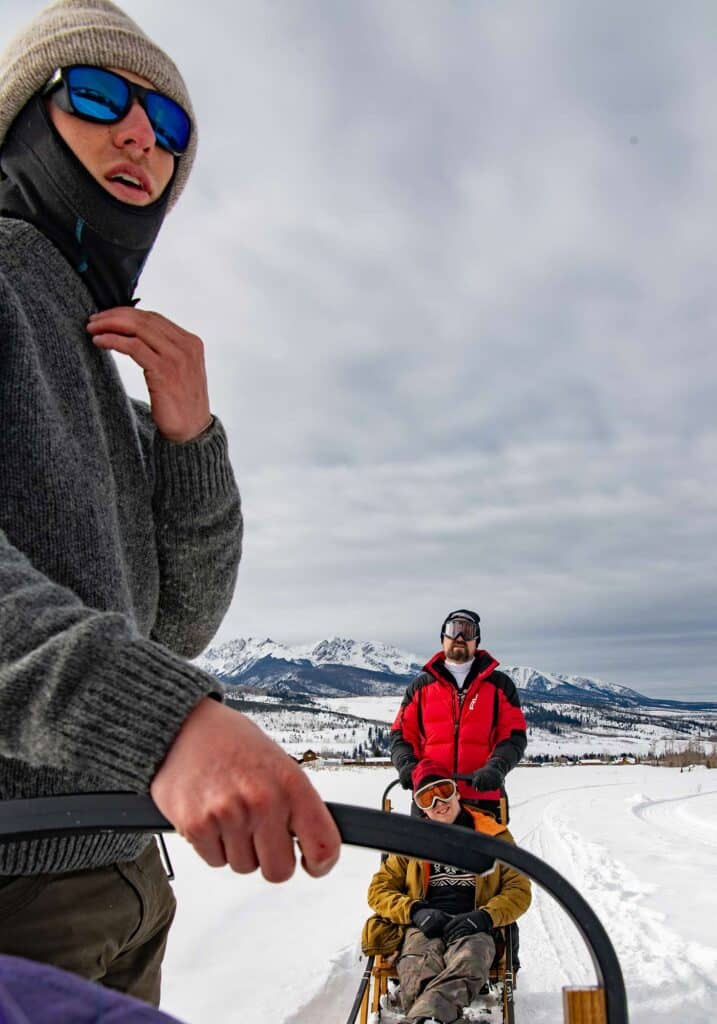
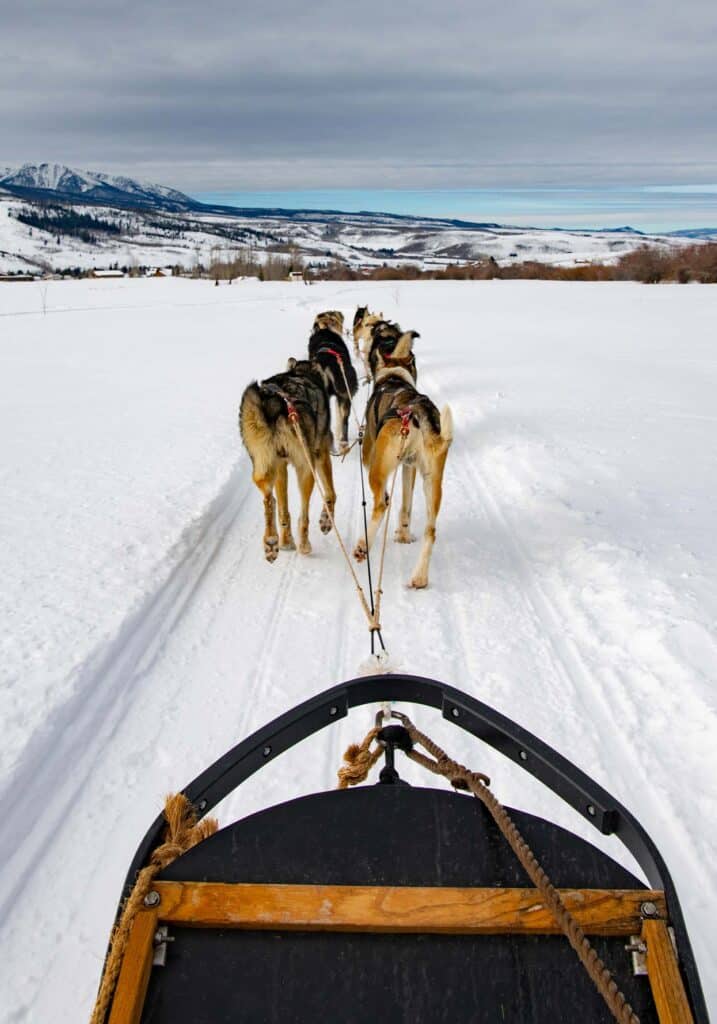
Gliding quietly through snow-covered fields offers a rare chance to step into the daily lives of professional mushers. It also reveals the dedication of the dogs devoted to the sport. Running along the Blue River, surrounded by endless Rocky Mountain views, is thrilling. Gaining an intimate look at the sport and its centuries-old traditions makes the experience even more compelling.
Inside a Colorado Dog Sledding Tour
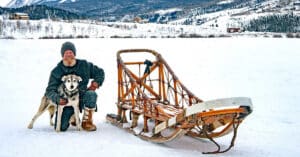
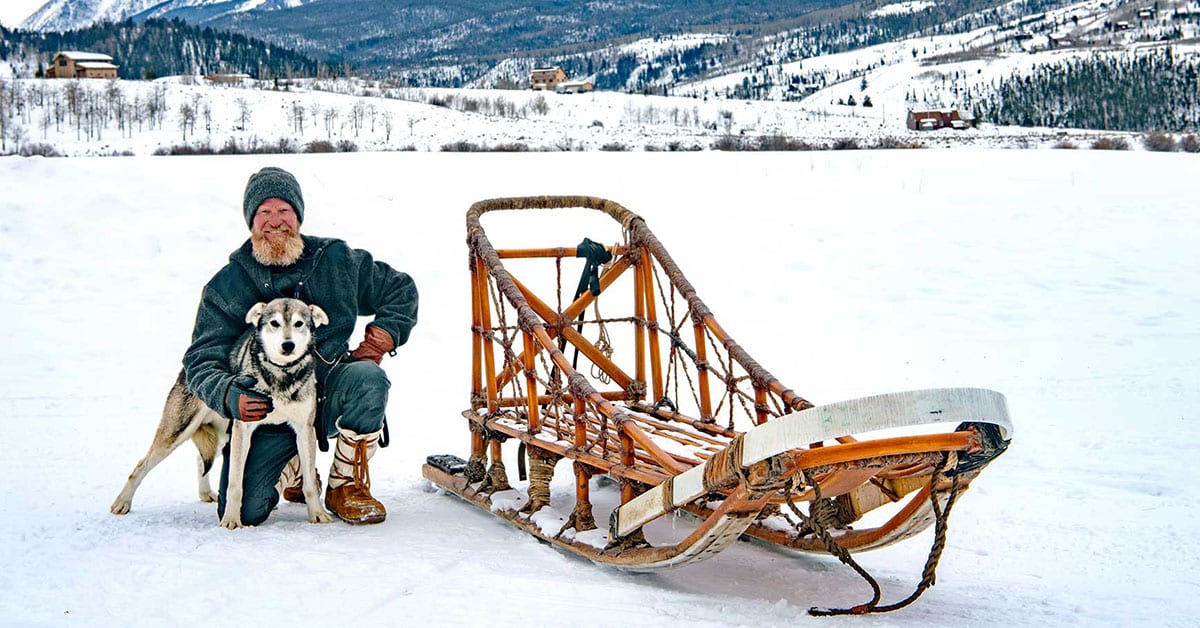
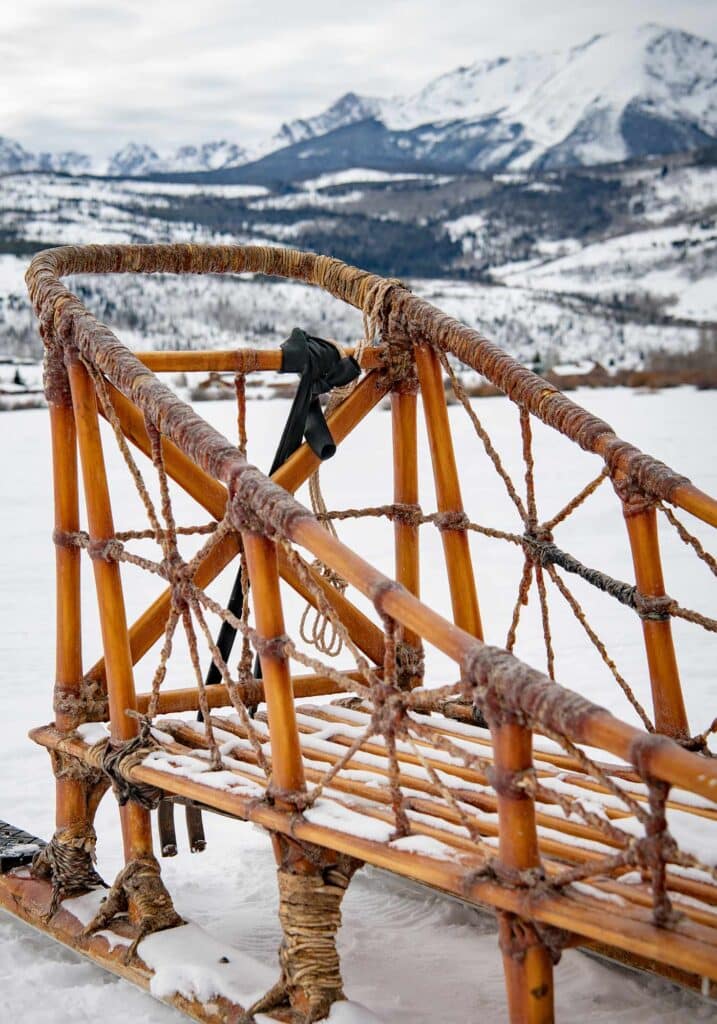
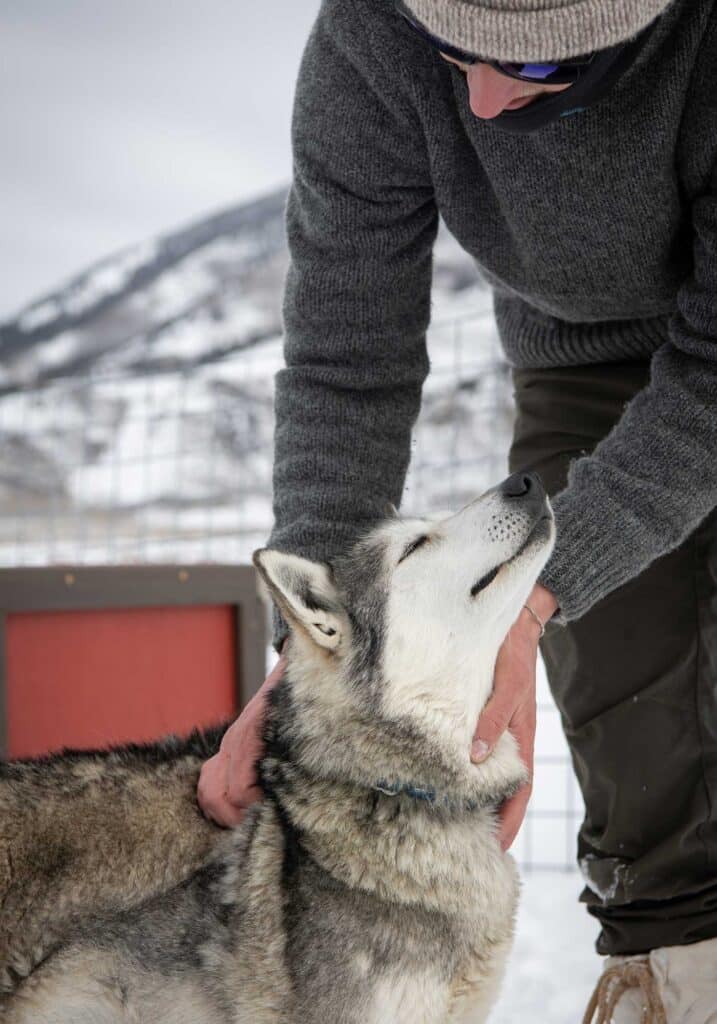
Tours at Colorado Dog Sledding begin with a briefing led by musher Ben Vaughan. He introduces the dogs and explains team positions, including lead, swing, team, and wheel dogs. Guests learn how to communicate with the team and anticipate the dogs’ movements. They also handle wooden sleds crafted in the traditional style of the early 1900s. The ride itself winds through scenic trails and along the frozen Blue River. Riders hear the swoosh of snow beneath the runners and the rhythmic breathing of the dogs as they pull. For many, the draw is more than adrenaline. Tourists are welcome to interact with some of the dogs when the tour is over. They leave with a new appreciation for the dogs—as individual athletes and as a team built for extreme conditions.
Meet the Alaskan Sled Dogs and the Mushers
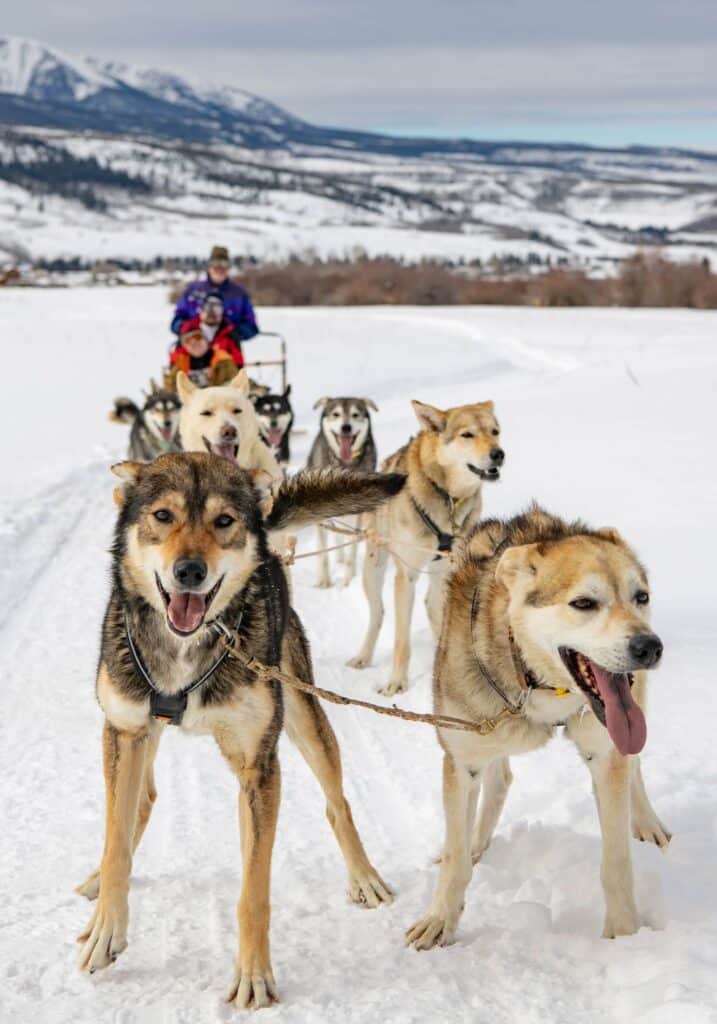
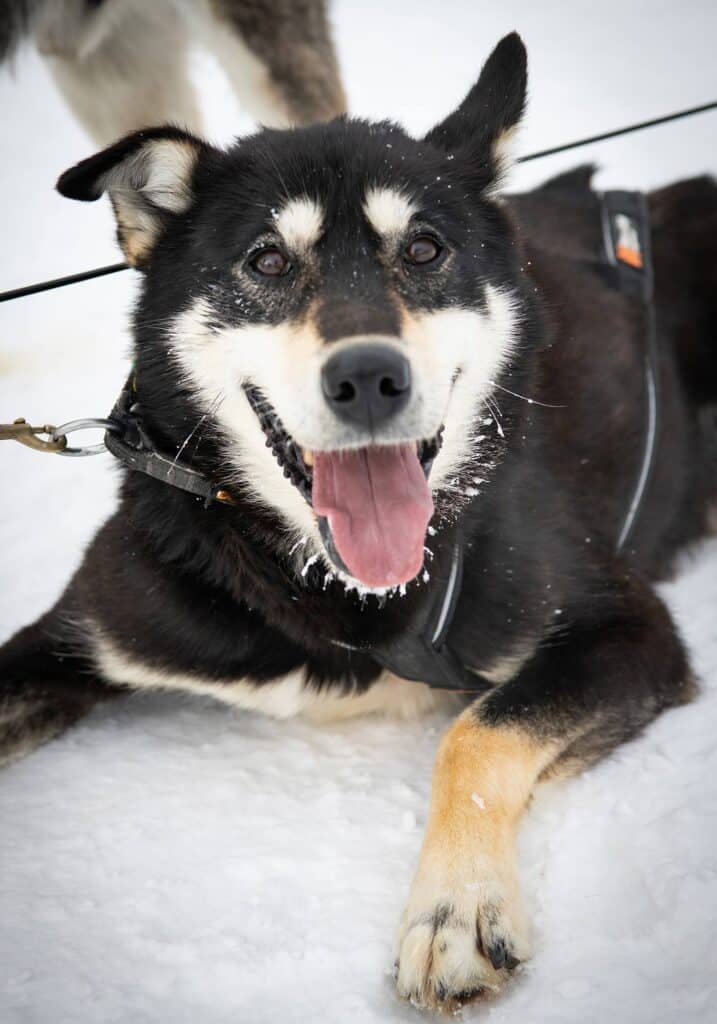
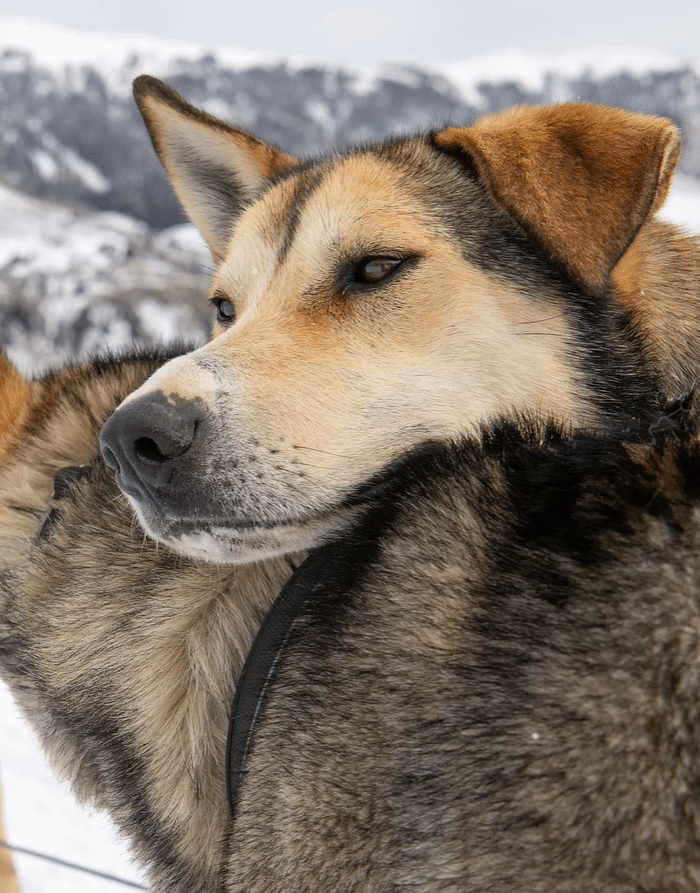
The dogs themselves are the stars of the show. Unlike purebred canines, Alaskan sled dogs are not a single breed but a group designation. Each litter is an intentional mix of breeds chosen for performance, stamina, cold-weather hardiness, and teamwork. Their lineage can include Siberian huskies, Alaskan malamutes and other hardy working dogs. Colorado Dog Sledding’s teams are made up of diverse, high-energy athletes. Seavey and his team carefully choose each dog that makes it onto a team. During the summer off season, the team helicopters the dogs to nearby mountaintops to train on year-round snow.
The Bond between Mushers and Champion Sled Dogs
Trainers become very familiar with the personalities and temperaments of each dog to make sure each one exhibits the right character traits and love for the sport. As professional mushers, Seavey and his team prepare dogs for the grueling 674-mile Iditarod through the Alaskan wilderness. They hold deep devotion, respect, and appreciation for each dog. One story illustrates Seavey’s dedication: he went to extraordinary lengths to save his lead dog, Faloo, who was badly injured by an angry moose during a leg of the Iditarod. Seavey reportedly spent more than $30,000 on the dog’s care and emergency surgery, despite overwhelming odds against her survival. Today, she happily enjoys life on the team in Colorado.
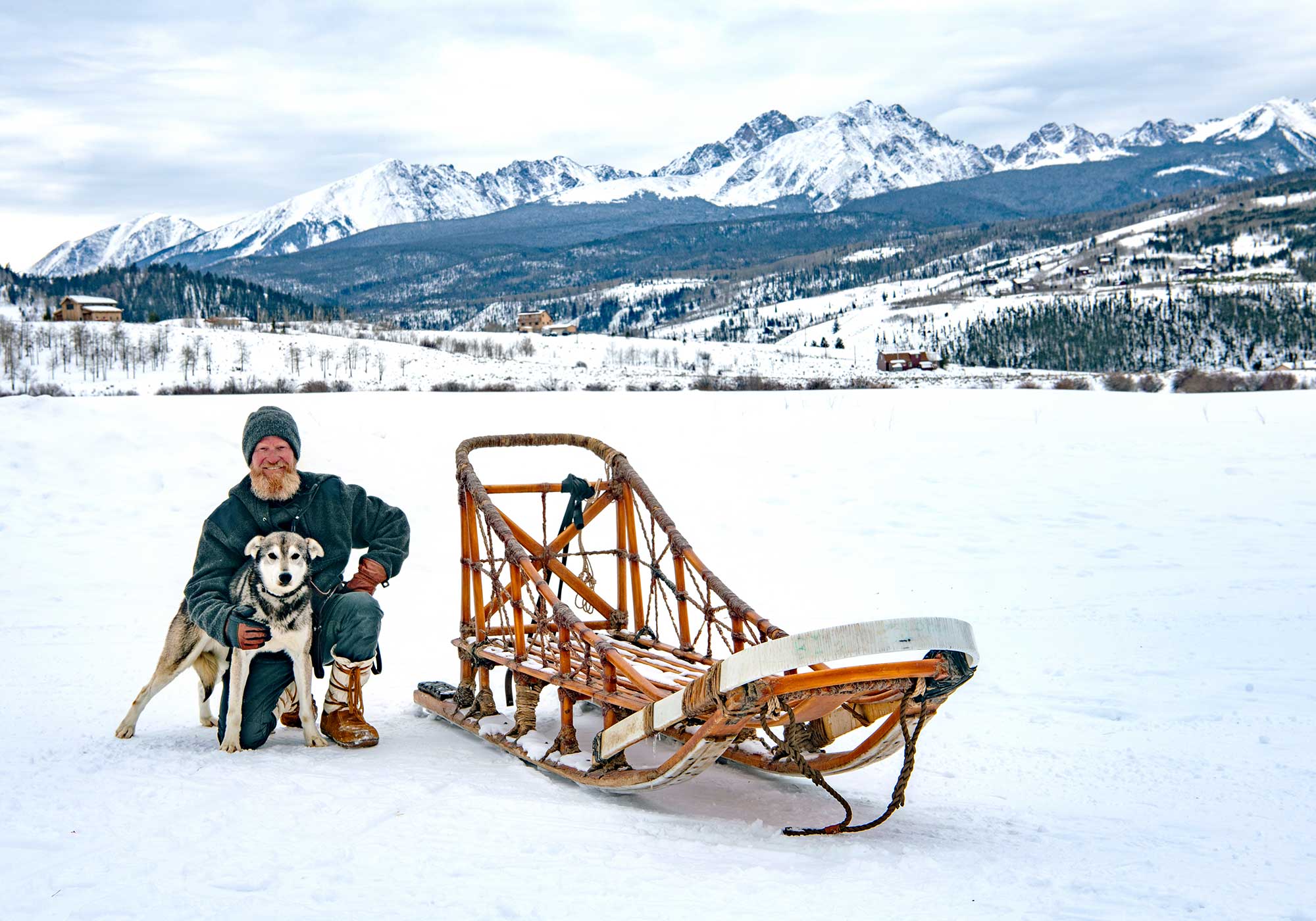
“Each dog has a personality and a specialty,” said Vaughan (seen above), a Navy veteran and adventure guide who manages the day-to-day operations in Colorado. Vaughan spent 22 years in the U.S. Navy, including five combat deployments. He later completed the Triple Crown of hiking: the Appalachian Trail, Pacific Crest Trail, and Continental Divide Trail. He discovered dog mushing in Alaska in 2022 and quickly embraced the challenge of working with these remarkable animals alongside Seavey and his team.
Many of the dogs are descended from championship lines or are champions themselves [like the three-time Iditarod champion seen above at right.]
“I had never run a dog team before,” Vaughan said. “It was intense, living in extreme conditions and learning to communicate with the dogs. But it was kind of a natural follow-up to my time in the Navy and on the hiking trails. I fell in love with the sport and with the dogs themselves. They teach you about trust, teamwork and resilience.”
Seavey and his guides are professional mushers driven by a love for dogs and the sport. They are also motivated by a desire to share their expertise with guests. With over 60 dogs in their care, it might be hard to believe the guides get to know each and every dog, but they do. “The dogs are exceptional athletes who bring unmatched skill, heart, and enthusiasm to every run.” writes Seavey, “They’re also friendly, affectionate companions who love meeting new people and soaking up attention.”
The History of Dog Sledding and the Iditarod
Dog sledding carries a storied legacy in the Arctic and sub-Arctic. Hardy teams were once essential for transportation, hunting, and survival in unforgiving landscapes. In 1925, a life-saving relay across frozen Alaska captured the imagination of a nation: mushers braved 674 miles in just over five days to deliver diphtheria serum to the isolated town of Nome.
This daring feat, known as the “Great Race of Mercy,” is the inspiration for the Iditarod Trail Sled Dog Race.
This daring feat, known as the “Great Race of Mercy,” inspired the Iditarod Trail Sled Dog Race. The first Iditarod race of 1973 counted Seavey’s grandfather as a participant and his father as a winner in a later race. The now famous competition celebrates courage, endurance, and the unique bond between humans and their canine companions. As the only six-time champion of the Iditarod, few are as devoted to the sport as Seavey. His incredible dogs are no doubt the most accomplished Iditarod racing team in history.
Balto, Togo, and the True Story of the Great Race of Mercy
Popular stories often highlight Balto, the spirited Siberian husky immortalized in books, a Central Park statue, and a Disney film. He is often portrayed as the lone hero of the 674-mile journey to Nome in 1925. In truth, Balto’s team ran only the final 55 miles. Newspapers sensationalized this last stretch, and Balto became the media darling.
“The whole Balto story, people think he ran the whole thing, right?” Vaughan said. “Truth is, Balto only ran that last bit into Nome. The real hero was a dog named Togo.”
Togo was a remarkable lead dog who, with his musher Leonhard Seppala, covered more than 260 miles across the brutal, ice-laden expanse of Norton Sound. When a violent blizzard derailed the original relay, Seppala volunteered for the longest and most perilous leg. Against gale-force winds and sub-zero temperatures, Togo and his team navigated treacherous ice to deliver the life-saving serum—an extraordinary feat of endurance, strategy, and trust.
This legacy lives on in every sled dog team at Colorado Dog Sledding. Many of the dogs are descended from championship lines or are champion themselves. They carry forward a tradition of resilience and athleticism that has endured through generations. Guests gliding behind these teams experience not just the thrill of speed and snow, but also a living connection to a heritage where courage and collaboration define every mile.
A Must-Do Winter Experience Near Vail
Whether skiing Vail’s slopes, exploring its alpine-style village or gliding behind a team of sled dogs, travelers experience Colorado’s winter countryside through adventure, history and a deep connection to remarkable animals. At Colorado Dog Sledding, Vaughan ensures that every guest leaves with a new respect for the dogs and the sport they represent.
“People come for the slopes but leave talking about the dogs,” Vaughan said. “It’s the personalities, the energy and the teamwork that stay with you. That’s what makes this experience unforgettable.” ~
Looking ahead to your next global adventure? Explore more destination travel blogs on Wine & Country Life. Our guides feature wine-focused travel, immersive cultural experiences, and thoughtfully curated itineraries around the world. From black-sand beaches in Iceland to lavender in Provence and Moab Utah, our destination guides highlight where to stay, sip, dine, and explore—helping you plan unforgettable travel beyond the familiar.
This blog post may contain sponsored content or affiliate links. If you click on a link and make a purchase, we may earn a commission at no additional cost to you. All opinions are our own. We only promote products and services that we believe are of high quality and value to readers.
MAI LIONNI GUSS is the editor at Wine & Country Life. She holds multiple degrees in literature and Shakespeare and has a boundless enthusiasm for exploring the life and style of Virginia’s wine country.
R. L. JOHNSON is our co-publisher and creative director. She began her career after graduating ArtCenter College of Design as a professional photographer in Los Angeles before moving into graphic design and art direction when she relocated to Charlottesville in 1994. As our company’s co-founder and visionary, she enjoys all aspects of the publishing process from story conception to graphic design to photography.